Do Replacement Windows help with heat?
Can Vinyl Windows instead of Aluminum Windows make a difference.
I have to admit I was really excited on this one.
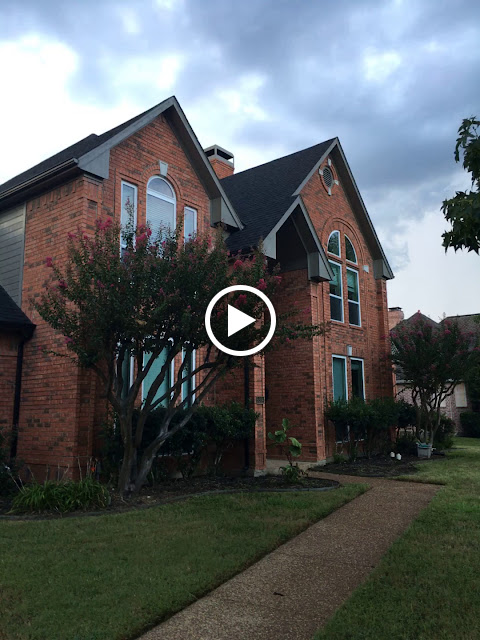
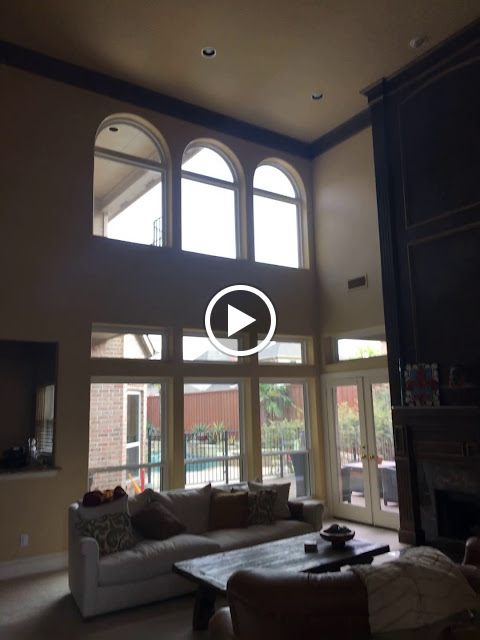
 Okay new plan, hang the ones we have aWhite aluminum double paned windows from the nineties in Coppell. Ninety three degree day as a high. Pretty great window install weather.
The customer had a laser pointer with a temperature display on it. It tells you the temperature of whatever you point it at. Air conditioning guys use it to see how cold the air is coming out of your vent.
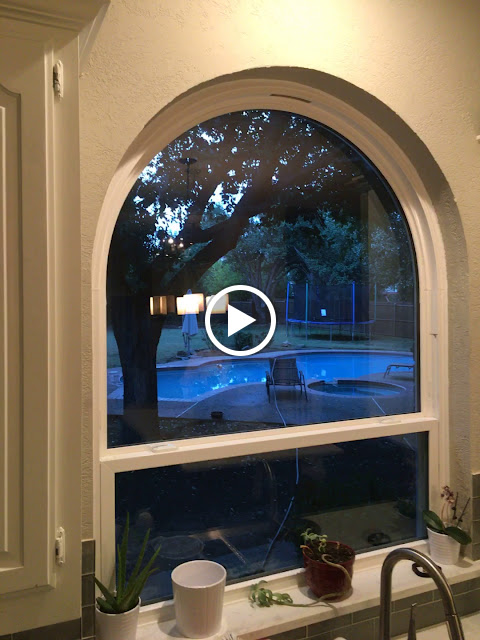
The day would teach us much about heat conduction and convection. Here's the before shot #throughglass for a time frame.

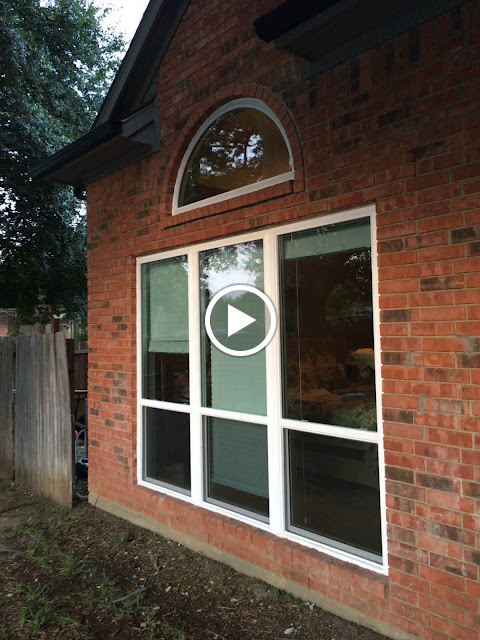
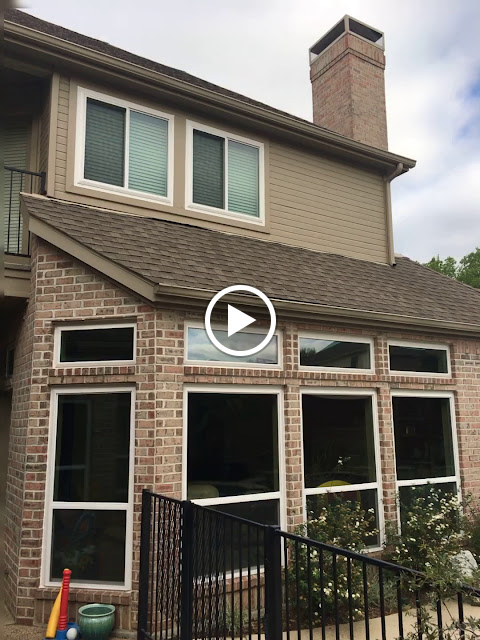
An hour or so later, new windows, vinyl, roughly 400% more energy efficient.

This set came in at .27 U Value with a .19 Solar Heat Gain Coefficient. The numbers are actually a little better on SHGC when you have grids as they block the sun and lower that number.
This shows the UV blockage from modern glass packages. You have a stark contrast between "what it looks like with and without a great window. There is some color to it. That's the Low E Glass coating.

My window was down to room temperature shortly after install.

The comparison of aluminum verses vinyl windows as demonstrated by the temperature gun.
Here's where it gets super amazing and brings up an ever interesting subject - Conduction and Convection Heat.

Even after the house had reacclimatized, this was the center sill temperature inside the sidelight. This window is aluminum builders grade type double paned clear windows.
There were some that read lower and some were up to 111.
Did you know that it being 95 degrees outside in direct sunlight puts 110 degrees on your window sill? Can you imagine what that does to your air conditioning and the poor machine trying to crank out that nice cold 60 degree air at the vent?
How is heat transferred through a window?
Heat can travel from one place to another in three ways: Conduction, Convection and Radiation. Both conduction and convection require matter to transfer heat.
If there is a temperature difference between two systems heat will always find a way to transfer from the higher to lower system.
CONDUCTION--
Conduction is the transfer of heat between substances that are in direct contact with each other. The better the conductor, the more rapidly heat will be transferred. Metal is a good conduction of heat. Conduction occurs when a substance is heated, particles will gain more energy, and vibrate more. These molecules then bump into nearby particles and transfer some of their energy to them. This then continues and passes the energy from the hot end down to the colder end of the substance.
CONVECTION--
Thermal energy is transferred from hot places to cold places by convection. Convection occurs when warmer areas of a liquid or gas rise to cooler areas in the liquid or gas. Cooler liquid or gas then takes the place of the warmer areas which have risen higher. This results in a continous circulation pattern. Water boiling in a pan is a good example of these convection currents. Another good example of convection is in the atmosphere. The earth's surface is warmed by the sun, the warm air rises and cool air moves in.
RADIATION--
Radiation is a method of heat transfer that does not rely upon any contact between the heat source and the heated object as is the case with conduction and convection. Heat can be transmitted though empty space by thermal radiation often called infrared radiation. This is a type electromagnetic radiation . No mass is exchanged and no medium is required in the process of radiation. Examples of radiation is the heat from the sun, or heat released from the filament of a light bulb.
While all that is indeed a mouthful, It means the sill is hotter than the temperature outside because my windows is in the sun and not in the shade.
It means the metal conducts the heat and gets hotter than 95. Probably well into 115 or 120 after the sun beats on it for 5 hours. That the air (and the wooden sill) are convecting heat from the window frame, and the glass. And the entire thing, like the sun on the other side of it, is radiating heat inside towards my precious ice cold air conditioning.


The end of the day just before I took the thermal shots. This shows the new triple that had 77 and the sidelite by the door that showed 107 to 111. Thirty degree difference! One day, half a day really.
The second floor one was a real hot beast to stand there on an extension ladder and caulk. Hottest 15 minutes you'll ever experience. No need for a tanning booth afterwards either.

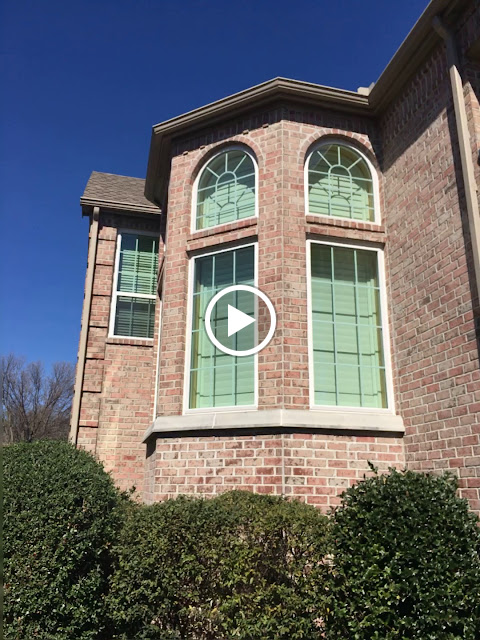
On this you notice the numbers are at .27 and .20 instead of the .19 on the window under it. This is a good one to know. Brochures have approximations and are close but often not accurate. Also if they test out a 2-0 by 3-0 but you build a 4-0 by 6-0 with that window..... it won't be the same.
Check out the outreach: www.DallasWindows.com